










When the hydraulic cylinder starts to leak, you may ask yourself whether it is necessary to perform a full repair, or whether you can replace the hydraulic cylinder seal yourself. Indeed, many farms and factories have replaced their own seals to save time and reduce costs. In today's competitive environment, this is understandable, and we need to reduce our expenditure on maintenance. But sometimes the fastest and cheapest immediate fixes don't translate into long-term savings. This articleZhongyou Heavy IndustryBring you should replace the hydraulic cylinder seals yourself.
Often, hydraulic seal failure is only a symptom of a larger potential problem. If this is the case, the repair of the surface will only mask these symptoms and lead to more expensive problems in the future. Therefore, with this in mind, you should consider the following points before resealing the leaking hydraulic cylinder.
1. wrong economy: replacing hydraulic seals is cheaper than a full repair.
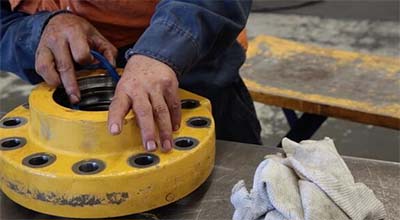
Hydraulic seals will always fail for some reason-but this is not always a failure of the seal itself. Many times, the problem lies elsewhere in the system, and the seal-the weakest link in the chain-is only a sign of trouble. If you replace the seal without solving the situation that caused the seal to fail, you can actually guarantee to fail again in a short time. Not only that, but the more the gasket is replaced, the worse the situation will be, which means that the frequency of maintenance is increasing. This means that the cylinders will be shut down for maintenance more frequently, resulting in productivity problems and increasing maintenance costs.
This snowballing situation will not disappear, and the cost of productivity loss will eventually be higher than the cost of effective maintenance. This is a false economy, and as operations increase, its cost increases exponentially. Small farms may be able to reseal an odd number of cylinders from time to time, but large factories with dozens of cylinders will soon find that this lack of maintenance is transferred to the balance sheet in one form or another.
2. do not repair the seal-repair the fault.
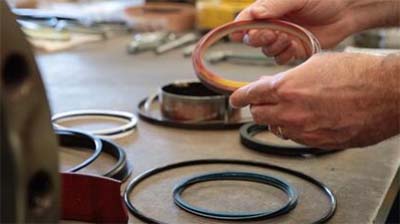
If your goal is to minimize maintenance costs, the most effective way is to diagnose the root cause of hydraulic cylinder failure and solve the problem. There are many reasons for hydraulic cylinder failure, which we have talked about in the previous article, but in order to make things easier, here are the main failure points you need to understand.
1) Stick the cylinder rod;
2) Bent piston rod;
3) Expanded cylinder barrel;
4) fluid degradation;
5) improper hydraulic oil;
6) Overheating and/or heat exposure;
7) Piston and bearing surfaces and other parts wear.
Any of these problems may cause healthy hydraulic seals to start leaking again, or cause relatively new hydraulic seals to wear and fail prematurely.
Moreover, if there are multiple faults, you can solve a problem, but you will still find that your cylinder drops again after a few days. Take a bent and scored cylinder rod as an example? You can re-chrome and fix the surface finish, but due to uneven load, the hydraulic seal will still fail. Therefore, replacing a faulty seal without addressing the root cause may simply result in another repair.
3. long-term maintenance saves time and money.
The only way to ensure that these potential problems are resolved is to perform a complete disassembly, inspection and diagnosis of the cylinder condition. You can do this if you have the equipment and experience to perform this task yourself. Most often, however, it is best to have a well-trained and experienced hydraulic service technician perform this task. Although some problems may be quite obvious, others are less obvious, which requires trained eyes and years of experience to evaluate cylinder conditions.
4. correct maintenance procedures should include:
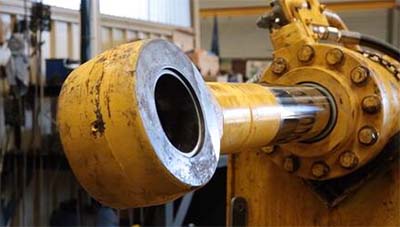
1) Disassemble carefully with special stripping table and equipment to avoid damage;
2) Measure all components carefully to ensure that they are within the specified tolerance;
3) Restore the hard chrome-plated surface if necessary;
4) Replace all internal and external seals;
5) Replace worn components, such as pistons, bearings and joints;
6) If necessary, honing machine barrel or machining new barrel from scratch;
7) Restore the worn base (including the use of surface-engineered recycled materials if necessary);
8) Use a special assembly workbench for precise assembly to ensure the correct torque setting and avoid damage to new parts due to improper assembly;
9) Rigorous testing on a calibrated hydraulic tester.
Therefore, before replacing the hydraulic seals yourself, you should always be extra careful to fully understand the root cause of each hydraulic cylinder seal failure and solve all these problems. If you have the experience and necessary tools to disassemble, inspect, refurbish and test all parts of the system, you can perform long-term repairs. For most people, using a well-known hydraulic cylinder repair company can save more time and money, which makes you more worry-free.
[Introduction to Zhongyou Heavy Industry]]
Zhongyou Heavy Industry (Xingdi Machinery) is a forging equipment manufacturer focusing on fluid pressure forming technology. Since its establishment in 2007, Zhongyou Heavy Industry has been committed to the technological innovation and product development of internal high pressure forming. The main products range from the production of ordinary hydraulic equipment, now developed to the production, research and development of domestic top fluid pressure forming technology forging equipment.
Zhongyou Heavy Industry is a provider of advanced lightweight forming technology. From product research and development, equipment production, mold development, program customization, to final delivery and value-added services, we provide customers with not only a hydraulic equipment, but a Complete set of intelligent manufacturing and forming solutions.